
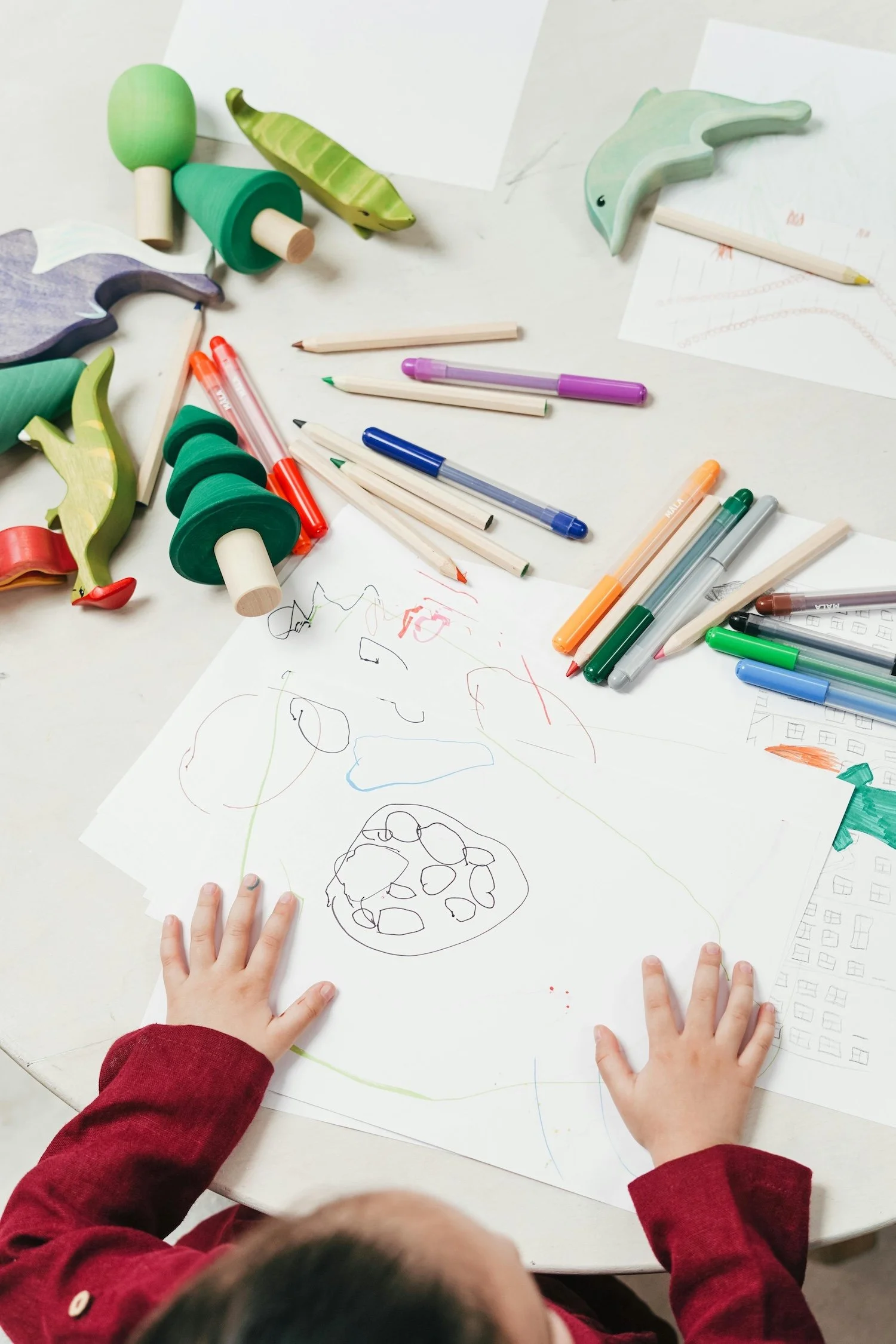
Art Therapy for Children & Young People
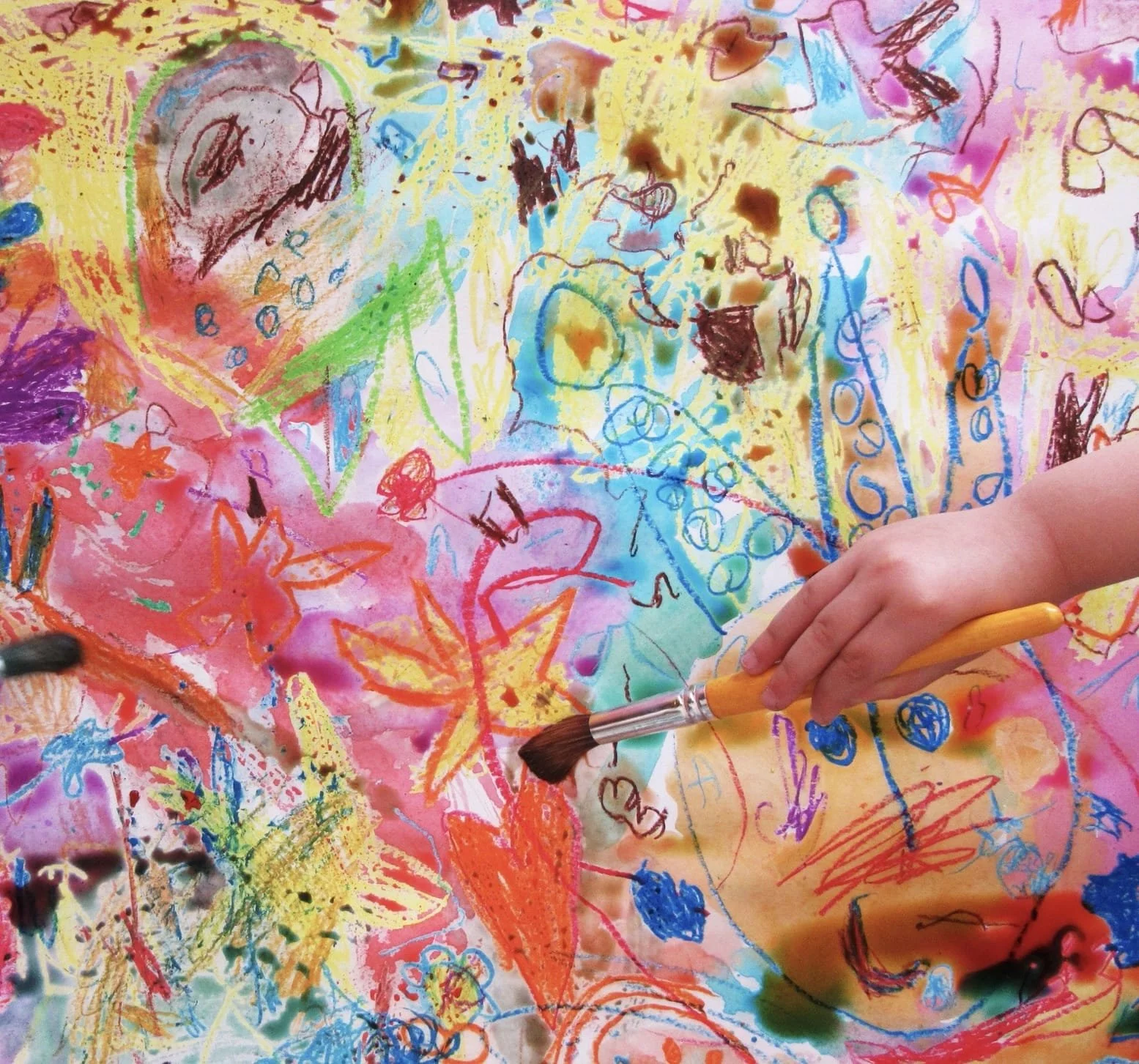
What can a young person expect from an Art Therapy session?
Art therapy sessions are non-directive, allowing the young person to go at their own pace. They will be able to explore art materials without the pressure of instructed art-making, with the supportive presence of an ally, and sessions will vary depending on the preference of materials and the level of comfortability of the young person.
Over time, this can help them to process difficult emotions, feel less isolated and misunderstood, find increased emotional freedom, find their voice, foster feelings of hope, learn to be playful, develop trust in themselves and others and increase their chances of being able to integrate more fully into their communities.

Supporting autistic children through creative expression.
Children on the autism spectrum often experience unique behavioral challenges and communication styles. Verbal expression can be especially difficult, with many finding it easier to communicate through representational images. Art therapy can help to address this. Within sessions, I meet the children and young people I work with at an empathic level, taking into consideration what they are communicating with their body language, in their artwork, in the emotions they show, in what they are reactive to, and in how they respond to me. By introducing the use of art materials, children can learn how to self-regulate, which can help to address things such as anxiety and attachment issues in ways that feel safe to them.
Understanding autism from lived experience.
As a neurodivergent practitioner, I understand some of the challenges that children and young people on the autism spectrum face, as I have experienced them too. This often includes things like feeling distressed about transitions, struggling relationally, experiencing challenges with self-expression, and the frustrations that come with feeling misunderstood.
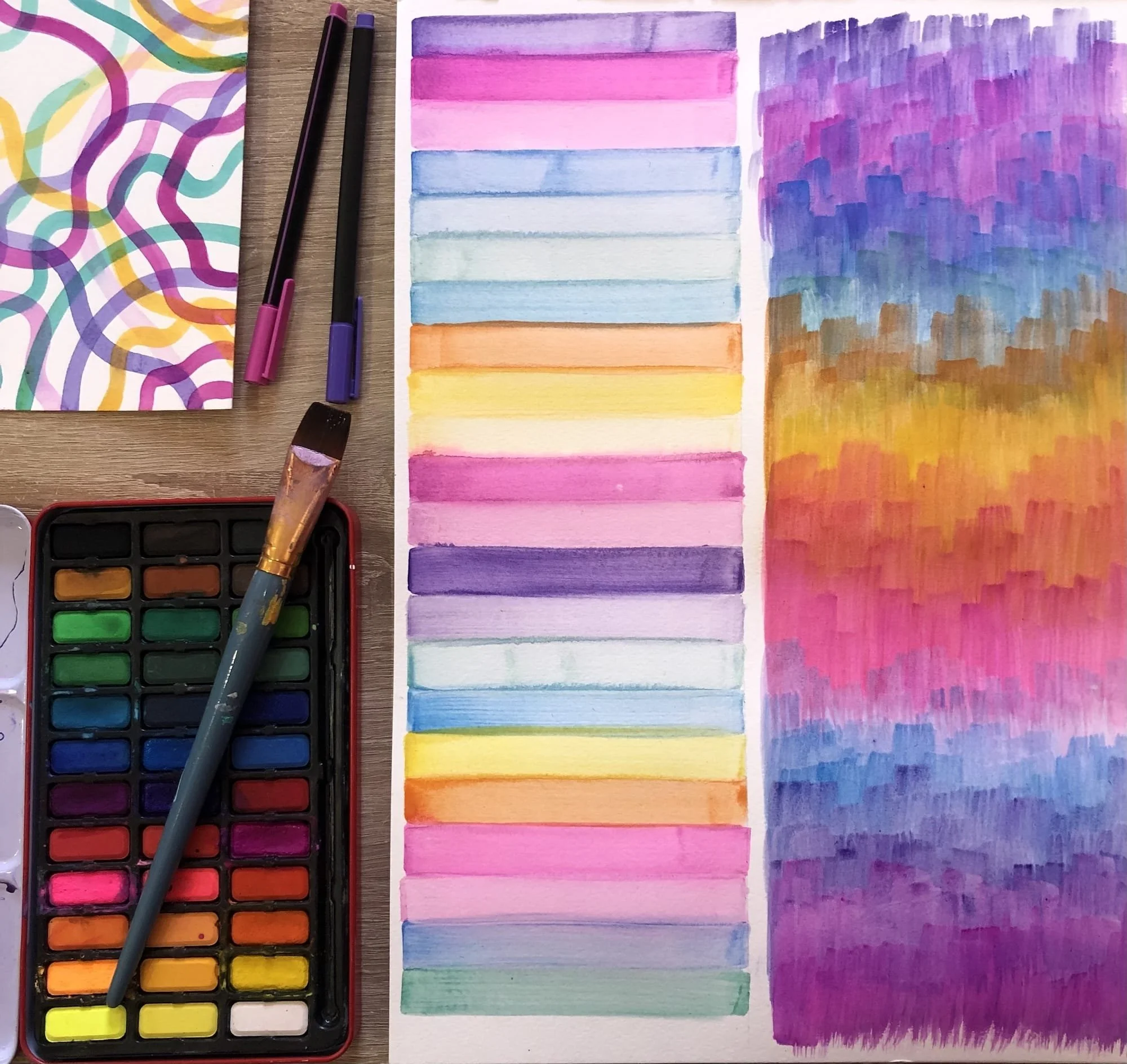
“Art Therapy makes me feel able to deal with my troubles. I have found ways to cope with things that have happened at school.”
- M, 12